Medical Electronics PCB Assembly: Reliable PCBA Solutions for Medical Devices
1. What is Medical Electronics PCB Assembly?
Medical electronics PCB assembly refers to the manufacturing and assembly of printed circuit boards used in medical devices, where safety, reliability, and regulatory compliance are paramount.
Unlike consumer electronics or industrial electronics products, medical device PCBAs must meet:
- High reliability: Devices need to operate stably for extended periods to avoid failure risks.
- Compact PCBA layout: Adapting to the miniaturization requirements of medical devices.
- Strong anti-interference capabilities: Resisting electromagnetic and other interference in the hospital environment.
- High standards: Adhering to medical safety standards such as electromagnetic compatibility and fire safety regulations.
SCSPCBA provides OEM and ODM medical electronics assembly services supported by a digital MES system, ensuring that every production stage is controlled and traceable.
2. Medical PCB Manufacturing and Assembly International Certification Standards
Medical PCBA manufacturing needs to follow a series of international standards to ensure product safety, reliability and compliance with regulatory requirements.
(1) Quality Management System
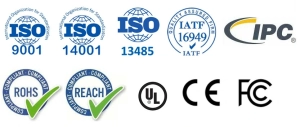
- ISO 13485 – Medical device quality management system
Establish full life cycle traceability, strict documentation, regular management review and supplier audit mechanisms to ensure that the printed circuit board production process is controlled and meets specific regulatory requirements for medical devices.
(2) Cleanliness and Environmental Control
- The circuit board manufacturing environment must comply with ISO 14644-1 (clean room classification)
- IEC 60601-1 (Safety Standard for Medical Electrical Equipment),
- IPC-5704 standard manages ion contamination (≤1.56μg/cm² as NaCl equivalent) and particulate matter residue (particles ≥5μm in diameter ≤50 particles/cm²)
(3) Electrostatic Protection
Static electricity protection follows the ANSI/ESD S20.20 standard. The electrostatic voltage in the work area is controlled within ±100V. The risk of damage to sensitive components is reduced through anti-static floors, grounding equipment and personal protective equipment.
(4)Material Compliance
Comply with RoHS (Directive on Hazardous Substances) and REACH (Registration, Authorization, Evaluation and Restriction of Chemicals) requirements, strictly control the content of hazardous substances such as lead, heart disease, mercury, etc., and use high Tg chemicals (Tg≥150℃) medical and grade drugs to ensure thermal stability and reliability
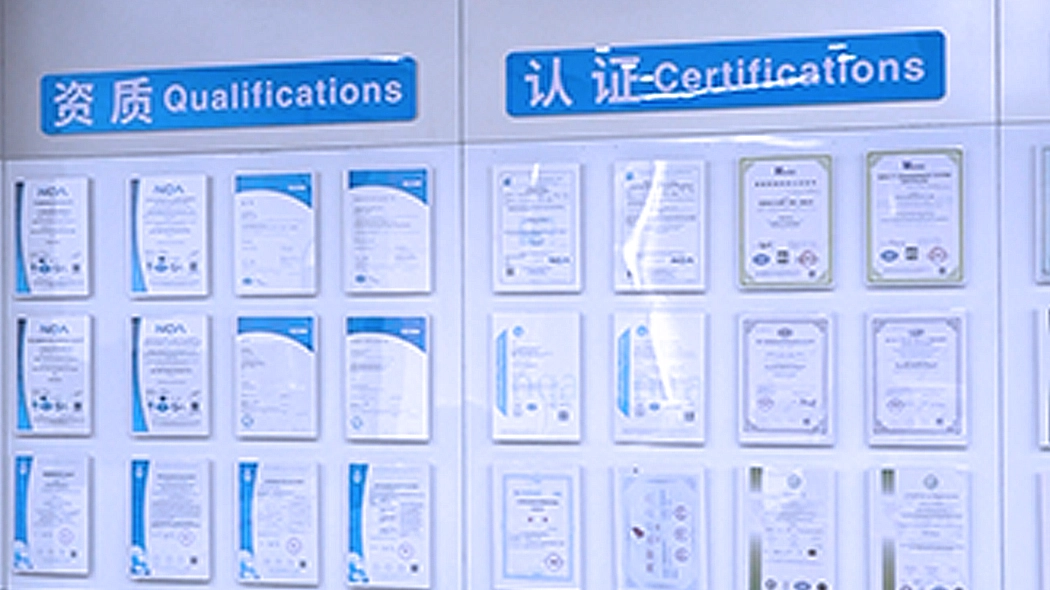
SCPCBA’s medical printed circuit board assembly manufacturing under an ISO 13485 certified process
3. Medical Electronic PCBA Manufacturing Process
(1) Design and Preparation Stage
BOM List Verification: Accurately verify the model, batch, and parameters of components such as resistors, capacitors, and chips according to the design documents.
Incoming Material Inspection: Use X-ray inspection equipment, LCR tester, etc., to conduct random inspections of components to ensure their packaging integrity and electrical performance meet standards.
Equipment Calibration: Perform parameter calibration on key equipment such as SMT placement machines and wave soldering machines to ensure production accuracy.
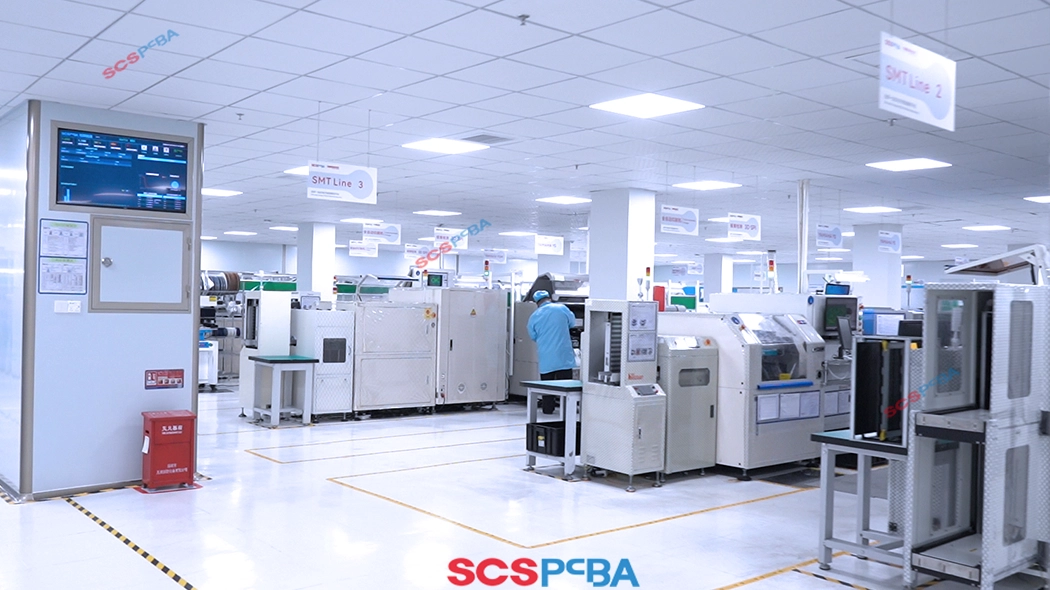
(2) SMT Placement Process
Solder Paste Printing: Use a stencil to evenly apply solder paste to the PCB pads.
Component Placement: A high-precision placement machine places chips, resistors, and other components in designated positions according to the coordinate file with an error of ±0.05mm.
Reflow Soldering: Melt the solder paste in a high-temperature furnace to form a reliable electrical connection.
AOI Inspection: Use automated optical inspection equipment to screen for defects such as cold solder joints and misalignment in real time.
(3) DIP Insertion and Wave Soldering Process
Manual/Automatic Insertion: Many medical device PCBs require workers to insert components into PCB holes, ensuring pin alignment and no bending to achieve power or signal stability.
Wave Soldering: The PCB is soldered through a wave of molten solder, forming a metallurgical bond between the pins and pads. This step requires strict control of wave height, soldering time, and flux flow to avoid insufficient solder penetration or bridging.
Lead Trimming and Post-Soldering: Excess leads are trimmed after soldering, and special components are manually resoldered.
(4) Testing and Quality Control
ICT Online Testing: Detects circuit connectivity and component parameters, with coverage exceeding 95%.
FCT Functional Testing: Simulates actual operating conditions to verify input/output performance.
Environmental Testing: Includes high and low temperature cycling, vibration testing, etc., to ensure product compliance with industry standards.
X-RAY Inspection: For BGA and other packages, non-destructive testing of the internal structure of solder joints.
(5) Assembly and Packaging
Conformal Coating: Covers the product with a protective coating to enhance moisture and corrosion resistance.
Casing Assembly: Secures the PCBA to the product casing and connects cables and heat sinks.
Vacuum Packaging: Uses anti-static bags and desiccants to prevent environmental damage during transportation.
SCPCBA supports hybrid technology for medical PCB assembly, ensuring process stability from SMT to DIP under a unified MES control system.
4. Medical PCB Assembly Materials
(1)Medical Grade FR-4
This is currently the most widely used medical PCB substrate. Specialized models that meet medical standards are halogen-free, BPA-free, and phthalate-free (e.g., Shengyi S1141-M). Ordinary FR-4 has insufficient heat resistance (Tg≈130℃) and cannot withstand repeated high-pressure steam sterilization (134℃), while medical grade FR-4 has a glass transition temperature (Tg) ≥170℃ and a thermal decomposition temperature (Td) ≥300℃, and can withstand more than 500 sterilization cycles without delamination or cracking.
(2) Polyimide (PI)
Suitable for applications requiring higher heat resistance, flexibility, and biocompatibility, such as implantable devices, biosensors, or surgical instruments requiring frequent high-temperature sterilization. PI (Polyiminated Insulated Plate) substrates can operate at temperatures exceeding 300℃ for extended periods and remain undissolved after 30 days of immersion in bodily fluids. Their skin irritation index is below 0.1 (far below the safety threshold of 1.0), making them the mainstream substrate for high-end medical sensors.
(3) Ceramic PCB
alumina (Al₂O₃) and aluminum nitride (AlN)) are primarily used in high-precision, high-frequency, and high-reliability medical devices, such as high-end biomedical sensors and signal processing modules for imaging equipment. Ceramic PCB materials possess excellent heat resistance, chemical stability, low dielectric constant, and good biocompatibility.
(4) Pad Surface Treatment
Nickel-free immersion gold plating (nickel content ≤0.1%) must be used to avoid nickel ion leaching that can cause contact dermatitis. The immersion gold layer thickness should be ≥2μm to enhance corrosion resistance.
(5) Solder Resist Ink
Medical-grade halogen-free ink (such as PSR-9000-M) must be used, free of benzene solvents and formaldehyde release, with a skin irritation index ≤0.21.
SCSPCBA supports OEM medical PCBA manufacturing according to drawings and ODM medical PCB assembly manufacturing.
5. Special Requirements for Medical Electronics Assembly
Medical device PCBA must address requirements beyond standard electronics:
- Long product lifecycle (5–10+ years)
- Full batch & serial traceability
- Stable process repeatability
- Documented test records
SCSPCBA’s MES system enables:
- Lot-level component traceability
- Process data logging
- Test result binding to PCBA serial numbers
6. Medical Device PCBA Testing and Quality Control
Medical electronic PCBAs are crucial to patient safety and diagnostic/treatment outcomes, requiring extremely stringent reliability and safety standards. Therefore, they necessitate more comprehensive and rigorous testing procedures.
(1) Automated Optical Inspection (AOI)
High-precision cameras are used to automatically scan the circuit board, detecting surface defects such as component presence, misalignment, reverse polarity, solder bridging, cold solder joints, insufficient solder, and solder balls.
(2) X-ray Inspection
For high-density packages such as BGA and QFN, where solder joints are hidden beneath the components, X-rays are the only effective means of detecting internal solder joint voids, cracks, bridging, and other defects.
(3) In-Circuit Testing (ICT)
Using a dedicated bed-of-nails fixture to contact test points on the PCBA, this method precisely measures circuit continuity, resistance, capacitance, inductance, diode/transistor polarity, and IC pin connectivity. It efficiently locates short circuits, open circuits, and component parameter deviations.
(4) Flying Probe Test
Suitable for small-batch production, prototype verification, or complex boards where a dedicated bed-of-nails fixture cannot be made. It measures electrical parameters by moving probes, offering high flexibility but slower speed.
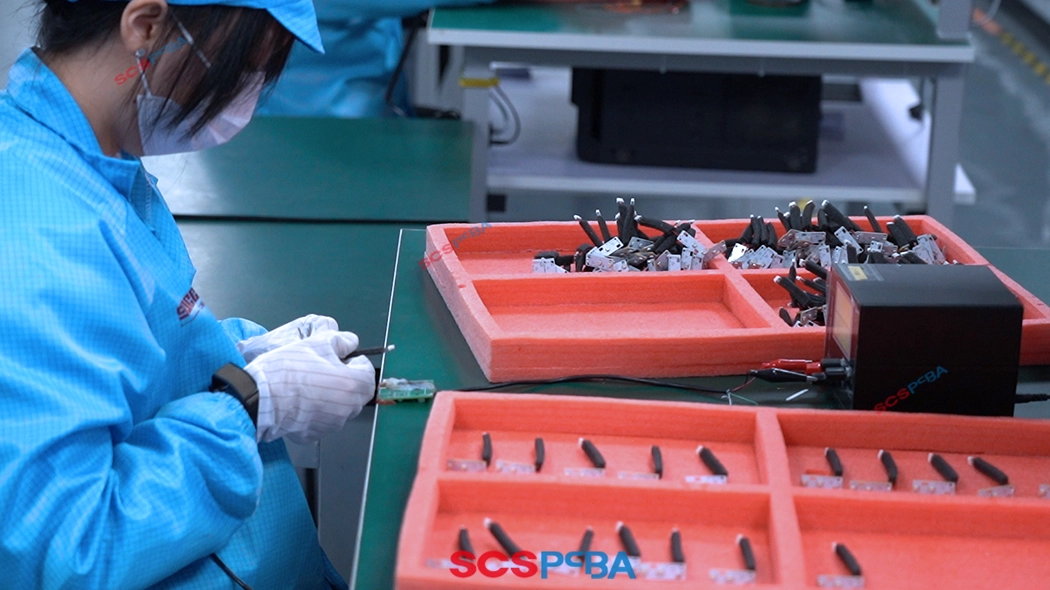
(5) Functional Testing (FCT)
This simulates the actual operating conditions of a medical device circuits assembly within the entire device, inputting signals and detecting whether all outputs are functioning correctly. This includes verifying all preset functions such as power management, signal processing, communication interfaces (e.g., RS-232, USB, Ethernet), sensor reading, actuator driving, and display driving.
During FCT, preset firmware or software is burned and run to ensure it works in conjunction with the hardware, with correct logic and no crashes or data errors.
(6) Environmental Stress Screening
Including high-temperature storage, low-temperature storage, temperature cycling, and high-temperature and high-humidity storage.
(7) Burn-In Testing
The PCBA is powered on and operated in a high-temperature environment for an extended period (several hours to several days) under rated or slightly higher loads to accelerate the exposure of potential manufacturing defects and early component failure risks.
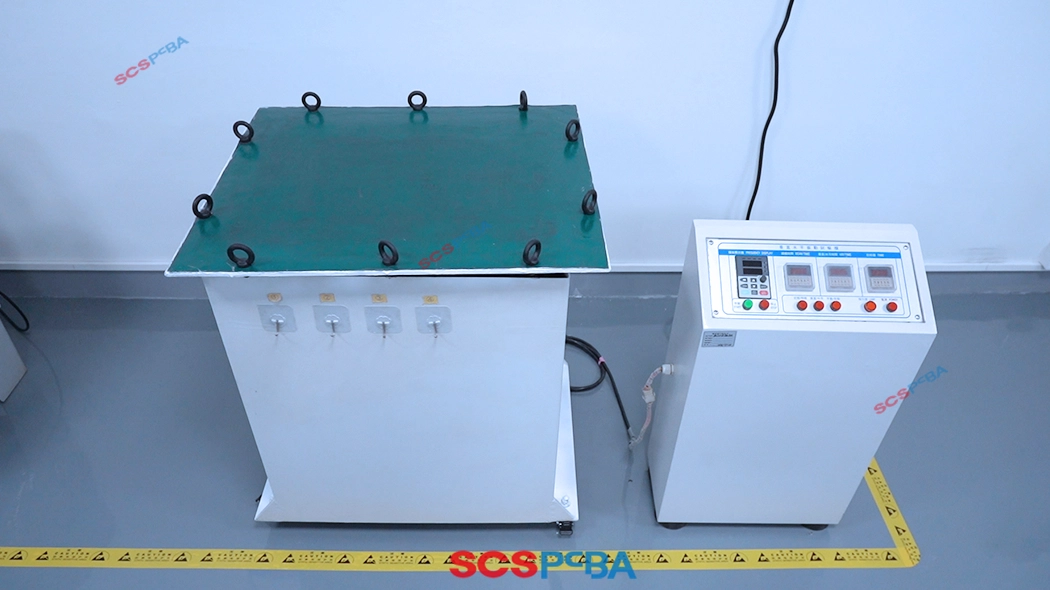
(8) Mechanical Stress Testing
Including vibration testing and drop testing, simulating the mechanical impacts that the product may experience during transportation and use to ensure the mechanical strength of solder joints and components.
(9) Special Environment Testing
Depending on the application scenario of medical devices, salt spray testing (to assess corrosion resistance), water splash testing, etc., may also be required.
7. Typical Medical Electronics PCBA Applications
SCSPCBA supports medical PCBA manufacturing for:
- Patient monitoring systems
- Diagnostic equipment control boards
- Infusion pumps
- Portable medical devices
- Medical power supply modules
Both OEM medical device manufacturers and ODM solution providers rely on stable, compliant PCBA partners.
8. Medical Device PCBA Online Quote
The pricing of medical PCBA projects is significantly higher than that of ordinary consumer electronics products, primarily due to the stringent reliability, safety, and compliance requirements.
(1) Material Costs (Highest percentage, typically 60%-80%)
- Component Selection
Medical devices require specialized medical-grade chips (such as specific MCUs and sensors). These components are difficult to procure and have high unit prices, potentially accounting for over 40% of the material cost per board. Scarce components require an additional 5%-15% premium. - PCB Board Material
Standard FR-4 board material cannot meet the requirements; high Tg (above 170℃), biocompatible, or high-frequency materials (such as PTFE) must be used, increasing costs by 20%-80% compared to conventional materials. Small-batch orders (<500 pieces) also incur high mold-making fees, causing a surge in single-board costs.
(2) Processing Fees (15%-25%)
- High-Precision SMT Placement
Medical products often use micro-components such as 0201, fine-pitch QFP or BGA packages, requiring extremely high placement accuracy. Processing fees are 20%-30% higher than for conventional products. If underfill or other processes are required, the cost per BGA can increase by 1-3 yuan. - Special Processes
Multi-level HDI blind/buried vias (2-4 levels), thick copper (3oz or more), and precision impedance control (±5% accuracy) are standard features of medical PCBAs. Each additional process increases the price by 15%-30%. Through-hole components are charged per pin (0.05-0.1 yuan/pin). Additional processes such as conformal coating and laser marking also increase costs.
(3) Testing and Service Fees (5%-15%)
- Mandatory Testing
Basic AOI testing is usually included, but X-ray inspection of BGA (50-100 RMB/batch) and ICT/FCT functional testing (0.02-0.05 RMB/test point) require additional payment. High-reliability products also require thermal cycling and damp heat testing, with single-test costs reaching 2000-5000 RMB. For small batches, single-board testing fees may reach 5-10 RMB. - Service Costs
Customized design modifications, expedited delivery (20%-50% surcharge within 48 hours), and after-sales repair costs will all affect the final quote.
(4) Certification and Compliance
- System Certification
ISO 13485 medical device quality management system certification is mandatory. Some products also require UL94V-0 flame retardant certification. The cost of certification maintenance and full-process testing can account for 10%-15%. - Regulatory Requirements
Products must comply with the regulations of the target market (such as EU CE certification, US FDA). This requires strict control over the entire process from design and material selection to production, increasing management costs and risk premiums. - Supplier Qualifications and Capabilities
Manufacturers with complete medical-grade certifications, extensive experience, and full-process testing capabilities (such as 100% X-ray, flying needle testing, and salt spray testing) may quote higher prices than manufacturers with “falsely labeled” certifications, but they effectively reduce customers’ subsequent compliance risks and after-sales costs, making them a truly “high-value” choice.
9. Medical Electronics PCBA FAQ
Must medical PCB assembly comply with ISO 13485?
Yes. ISO 13485 is the most widely recognized quality standard in the medical device PCBA manufacturing industry.
Do you support OEM and ODM medical PCBA projects?
Yes. SCSPCBA supports both OEM (Original Equipment Manufacturer) and ODM (Original Design Manufacturer) medical electronic assembly.
How is traceability managed?
Through our MES system, materials, processes, and test results are linked to each PCBA unit.
Do you support small-batch medical PCBAs?
Yes. We support prototyping, pilot production, and mass production.
Do you support rapid online quoting for medical electronic PCBAs?
Yes. After uploading your Gerber file and BOM list through the online quotation system, the system can generate a preliminary quotation within seconds, covering PCB manufacturing, SMT assembly, and material costs, suitable for quickly assessing project feasibility
What industry standards must be followed during the manufacturing process of medical electronic PCBAs?
Medical electronic PCBAs typically need to comply with standards such as ISO 13485, IPC-A-610 Class 2/3, IPC-6012, RoHS, and REACH. Some products also require cooperation with customers to complete regulatory documentation such as FDA and CE certifications to ensure product safety and traceability.
Do you support high-density, high-precision medical circuit board assembly?
Yes. Medical electronic PCBAs often involve high-density PCBs, micro-packaged devices (such as 0201, 01005), BGAs, QFNs, etc. We have precision SMT assembly, AOI, and X-ray inspection capabilities to ensure soldering quality.
What testing and quality control processes are typically involved in medical electronic PCBA?
Common tests include SPI, AOI, X-Ray, ICT, FCT, and aging tests. For medical projects, we can also customize functional tests and reliability verifications to ensure long-term stable operation.
Is the online quote suitable for high-standard projects like medical electronics?
Yes. The online quote is for initial cost assessment. For medical electronics projects, our engineering team will manually review and confirm the process after receiving the quote to ensure that the price and manufacturing solution meet medical-grade quality requirements.
What value-added services can you provide for medical electronic PCBAs?
In addition to PCBA manufacturing, we also offer DFM/DFA optimization, BOM optimization, alternative material suggestions, box build, burn-in testing, and packaging services to help customers reduce overall manufacturing costs.
Latest News
 Box Build Printed Circuit Board Assembly Services | Complete Product AssemblyFebruary 25, 2026 - 1:00 am
 PCB Assembly from Prototype to Mass Production: Solving Volume Challenges for ODM/OEMFebruary 10, 2026 - 1:00 am
 PCB Assembly Testing & Inspection: Building Trust Through Measurable Quality ControlFebruary 5, 2026 - 1:00 am
 From Prototype to Mass Production: Consumer Electronics PCB AssemblyJanuary 30, 2026 - 1:00 am
 Industrial Control PCBA Solutions With Strict DFM and MES ControlJanuary 25, 2026 - 1:00 am